First Month in San Miguel: A Field Report
The weather is impossible, the Jardín never sleeps, and I haven't driven a car in three weeks. A first-month field report from San Miguel de Allende, Mexico.
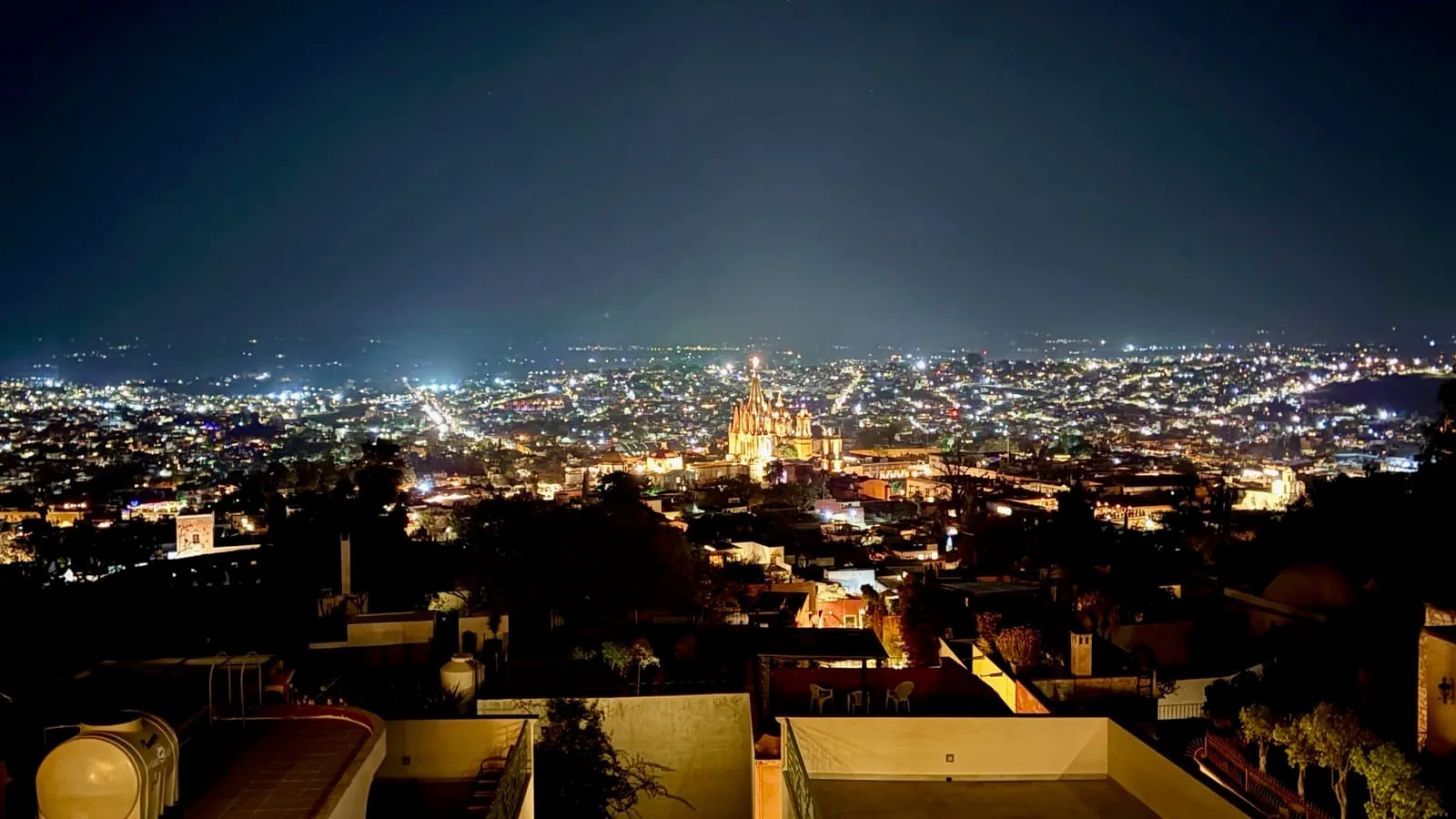
The café con leche cost thirty pesos, and I was drinking it at 10 AM on a Tuesday in a courtyard older than my country.
Above the terracotta rooftops, the pink spires of the Parroquia caught the morning light the way they've been catching it for a hundred and fifty years. A woman arranged marigolds in a bucket by the door. Somewhere down the cobblestone street, a man was singing something I couldn't translate but completely understood.
My wife was reading across the table. Our kid was still asleep — fourteen-year-olds, it turns out, adapt to retirement hours faster than anyone. We'd been in San Miguel de Allende for thirty-one days. My phone had 4% battery. I didn't care.
The Number That Made It Real
You remember the spreadsheet. The one I argued with at 2 AM, the one that said freedom had a price and the price was lower than I thought. That spreadsheet had a line item: monthly expenses, $3,800.
Our San Miguel number is about two grand. For a family of three.
Rent for a beautiful place in the San Antonio colonia — colonial walls, a rooftop with a view of the Parroquia, more space than our old apartment — runs about $1,200 a month. Groceries at the Mercado Ignacio Ramírez, where you buy tomatoes from the woman who grew them: $400. Utilities, internet, phone: $150. The rest is restaurants, coffee, and the occasional bottle of mezcal that costs less than a mediocre cab back home.
A dinner for two at a nice restaurant with wine? Forty-five dollars. A café con leche at my morning spot? A buck fifty.
The spreadsheet didn't just work. It laughed.
The Jardín Never Sleeps
The Jardín Principal is technically a plaza. Wrought-iron benches, Indian laurel trees clipped into perfect green cubes, the neo-Gothic Parroquia rising behind it like something out of a fever dream. But calling it a plaza misses the point. It's the living room of the entire town.
Every evening, it fills. Mariachi bands set up in the gazebo. Street vendors sell elote and esquites. Papier-mâché mojigangas — twelve-foot-tall puppets — dance through the crowd during festivals, which is to say constantly. There's always a festival. Day of the Dead transforms the streets into a cathedral of marigolds and candles. La Alborada lights the sky with fireworks at 4 AM. First Saturdays, the old textile factory — Fábrica Aurora — opens its forty-three galleries and the whole thing becomes a block party with wine and live music.
Our kid made friends at the Jardín in the first week. Didn't speak much Spanish yet. Didn't matter. The Jardín doesn't require a language. It requires showing up.
A City Built for Walking
Here's your daily routine in San Miguel, and I swear it formed on its own:
Morning coffee in Centro, watching the town wake up — shopkeepers hosing cobblestones, church bells marking the hour. Walk to the market for whatever looks good. Cook lunch at home. Afternoons, you wander. San Antonio, just south of Centro, is quieter — stone walls draped in bougainvillea, streets narrow enough to touch both sides. Guadalupe has murals the size of buildings, an evolving outdoor gallery that changes every few months. Guadiana is the calm one — tree-lined streets, manicured parks, the neighborhood where you go when you want silence and a long walk.
No car. Haven't needed one. Haven't wanted one. Everything is twenty minutes on foot, if you don't mind hills — and you shouldn't, because the hills are the reason the views exist.
The cobblestones will destroy cheap shoes. Budget for that.
The daily routine I spent my whole career chasing — the one with no commute, no alarm, and nowhere to be except exactly where I am — it didn't take discipline to build here. It took about four days.
My Father Knew
My dad retired to San Miguel de Allende in the late 1980s. He was younger than I am now, which is a fact I try not to think about too often.
He saw something here that took me decades to understand. Not the cheap rent or the weather — though the weather is genuinely absurd, seventy degrees and sunny so consistently that you stop checking the forecast. He saw that this town lets you live at the pace a life actually requires. Not the pace of quarterly earnings or performance reviews or the 6:47 AM train. The pace of a man sitting in a courtyard with good coffee and nowhere to be.
I used to think he was running away from something. Turns out he was running toward something, and it just took his son thirty years to follow.
The Report
So here it is. One month. A family of three. About two thousand dollars.
The kid is picking up Spanish faster than either of us. My wife found a yoga studio and a circle of friends. I found a courtyard café with thirty-peso coffee and a view of the pink church my father probably looked at from this same angle, in this same light, almost forty years ago.
This is a field report, not a fairy tale. The bureaucracy is real — getting a bank account here requires the patience of a saint and documents you didn't know existed. The language barrier hits hardest when something breaks. Some nights, you miss the stupid, small things — a particular brand of hot sauce, the ease of knowing how everything works without thinking.
But the data says stay. The money works. The life works. And for the first time in a very long time, I'm not planning next quarter.
I'm planning tomorrow. Maybe a walk to the Jardín. Maybe the market. Maybe just another thirty-peso coffee in a courtyard older than my country, watching the light do what it does.
That's the whole report.
If this resonated, The Dispatch goes deeper every week. More numbers, more stories, no spam.
More Dispatches
Mexico's New Expat Reality: What Changed in 2026
Mexico doubled expat visa requirements in 2026. From San Miguel de Allende, what the new rules mean for American retirees and digital nomads planning to move south.

The Bureaucracy Dispatch: Visas, Banks, and the Art of Mexican Patience
Getting a temporary resident visa requires eleven documents, three government offices, and the spiritual fortitude of someone who has accepted that mañana is a philosophy.