I Spent 18 Months Tracking Every Peso in San Miguel: Here's What $1,800 Actually Gets You
My spreadsheet has 547 rows. Eighteen months of tracking every peso spent in San Miguel de Allende, from the fifty-peso tip to the woman who waters our plants to the 28,000-peso quarterly property tax bill. Every café cortado, every Uber to the doctor, every bottle of mezcal bought for friends who visit from the States. Why track it all? Because "Mexico is cheap" tells you nothing. Because expat Facebook groups are full of people arguing whether you need $1,200 or $3,000 per month, and nobody
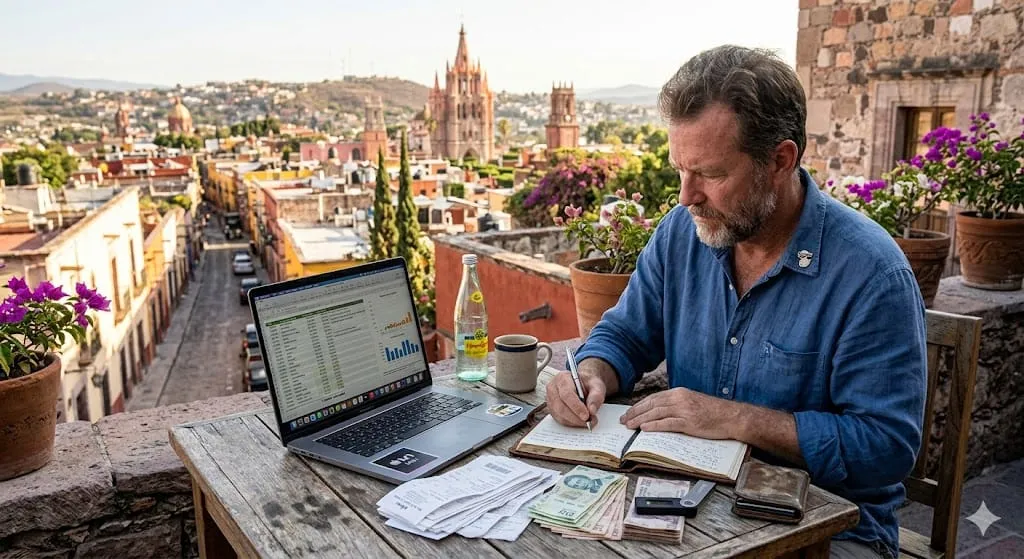
My spreadsheet has 547 rows.
Eighteen months of tracking every peso spent in San Miguel de Allende, from the fifty-peso tip to the woman who waters our plants to the 28,000-peso quarterly property tax bill. Every café cortado, every Uber to the doctor, every bottle of mezcal bought for friends who visit from the States.
Why track it all? Because "Mexico is cheap" tells you nothing. Because expat Facebook groups are full of people arguing whether you need $1,200 or $3,000 per month, and nobody shows receipts. Because when you're planning an escape from corporate life, "it depends" isn't an answer — it's an excuse to stay put.
So here's what $1,800 USD actually gets you in San Miguel de Allende in 2024. Not the backpacker version. Not the resort version. The real version, where you have a home, pay taxes, and live like a person instead of a tourist.
The Big Three: Housing, Utilities, Help
Rent: $650/month for a two-bedroom casa with a rooftop terrace in Centro Histórico. Stone walls, eighteen-foot ceilings, parking space, and a view of Parroquia de San Miguel Arcángel. Our landlord is a Mexican architect who speaks better English than most Americans and fixes things within 24 hours.
Could we rent cheaper outside the center? Sure. For $400-500 you get something decent in Guadalupe or San Antonio. But then you're driving everywhere, and Centro is where life happens. The extra $150-200 buys you walkability, and walkability buys you a different kind of existence.
Utilities: $85/month average. Electricity runs 1,200-1,800 pesos depending on the season (we don't have heat, but we run fans and occasionally a small AC unit). Water is 180 pesos every two months. Trash pickup is 200 pesos quarterly. Internet is 650 pesos monthly for fiber that's faster than what I had in Denver.
Housekeeping: $120/month for Rosa, who comes twice a week, does laundry, and has become part of the family. She makes 300 pesos per visit, which is above market rate but below what she's worth. Mexican friends tell me this is generous. Rosa tells me her other clients pay less but expect more. I tell Rosa we're not other clients.
Food: The Beautiful Reality
Groceries: $280/month shopping at Mega, Soriana, and the Tuesday market. Produce is stupidly cheap — avocados for eight pesos each, perfect tomatoes for twelve pesos per kilo, mangoes so good they make you question why you ever ate fruit north of the border.
Meat is reasonable. Fish is expensive because we're landlocked and everything decent comes from the coast. Imported cheese costs more than it should. Mexican cheese is better anyway.
Restaurants: $185/month for two people eating out 6-8 times. Comida corrida at local places runs 80-120 pesos. Dinner at gringo spots hits 300-500 pesos per person. The math is simple: eat where locals eat, and your money stretches. Chase the expat scene, and you'll pay California prices for mediocre food.
Best meal value: Tuesday lunch at Doña Esthela's place near the Mercado de Juárez. Forty-five pesos for soup, main course, rice, beans, and agua fresca. The woman is an artist with a comal.
Getting Around
Transportation: $95/month split between taxis, Uber, and bus trips. Local taxis charge 60-80 pesos for most rides within the city. Uber is slightly cheaper but less reliable — half the drivers can't find your house even with GPS.
The bus to Querétaro costs 85 pesos and takes ninety minutes. Mexico City is 280 pesos and three hours. Having those connections matters when you need real medical care or want to fly somewhere internationally.
We don't own a car. Parking in Centro is miserable, traffic is worse, and everything we need is within walking distance. The money we save on car payments, insurance, and gas pays for a lot of taxi rides.
Healthcare: The Pleasant Surprise
Medical: $45/month average, including insurance, doctor visits, and prescriptions. IMSS insurance costs 6,500 pesos annually for residents over fifty. Doctor visits run 500-800 pesos for specialists, 300-400 for general practice.
My wife's prescription medication — $340/month in the States with insurance — costs 280 pesos here. Same manufacturer, same dosage. The only difference is the Mexican healthcare system isn't designed to bankrupt patients.
Dental work is spectacular and affordable. My crown replacement cost 4,500 pesos. Same work in Colorado would've run $1,800 minimum.
The Fun Stuff
Entertainment: $125/month for movies, concerts, museums, and the occasional weekend trip. Movie tickets are 70-90 pesos. The Angela Peralta Theater brings world-class performances for 300-800 pesos. Museums are free on Sundays.
Cocktails at rooftop bars cost 180-250 pesos. Local cantinas charge 35-50 pesos for beer, 80-120 for mezcal. The difference isn't just price — it's atmosphere. Tourist bars feel like tourist bars everywhere. Local spots feel like Mexico.
Everything Else
Personal care: $35/month for haircuts, basic toiletries, and miscellaneous health items. Haircuts cost 150-200 pesos for men, 300-500 for women at decent salons. Pharmacy chains like Guadalajara and Benavides stock everything you need.
Shopping: $55/month for clothes, household items, and random purchases. Mexico has Costco, Home Depot, and every major chain. Prices aren't dramatically different from the States, but you buy less because you need less.
The Real Numbers
Total monthly spending: $1,675 on average over eighteen months.
Some months hit $2,100 when friends visit or we take trips. Other months drop to $1,350 when we're homebodies. The median sits right at $1,680.
What doesn't this include? Visa runs to the border ($300 every six months). Annual trips back to the States ($1,200 in flights). One-time setup costs like furniture and kitchen supplies ($2,800 total). These are real expenses, but they're not monthly.
What You Actually Get
For $1,800/month, you get a life that would cost $4,500-5,500 in any decent U.S. city. You live in a UNESCO World Heritage site surrounded by art, architecture, and culture that predates your country. You eat better food, get better healthcare, and stress less about money.
You also get isolation from family, bureaucracy that makes the IRS look efficient, and infrastructure that works differently than what you're used to. The cost isn't just financial — it's emotional, social, and practical.
But if you're reading this, you're probably already weighing those tradeoffs. The numbers are just the math. The life is something else entirely.
Some months are leaner than others. Every month is mine.
If this resonated, The Dispatch goes deeper every week. More numbers, more stories, no spam.
More Dispatches

What 47 Pesos Gets You in San Miguel de Allende (Spoiler: More Than $47 in Austin)
I walked into the grocery store with 50 pesos in my pocket — about $2.50 in real money — and came out with enough food for dinner. Not ramen. Not a sad desk salad. An actual meal for three people. This is the kind of math that makes your old life feel like a fever dream. Let me break down exactly what 47 pesos bought me at the local Soriana yesterday: two pounds of chicken thighs (22 pesos), three Roma tomatoes (4 pesos), one white onion (3 pesos), a bunch of cilantro (5 pesos), two limes (2 p
Why I Ignored the 4% Rule (And Retired at 43 Anyway)
The 4% rule is gospel in early retirement circles. Pull 4% from your nest egg annually, the orthodoxy goes, and your money will last forever. Or at least thirty years, which is close enough for most spreadsheets. I ignored it completely. Not because I'm reckless with money — quite the opposite. I spent fifteen years as a corporate finance guy, building models that predicted quarterly earnings to the penny. I know how math works. I also know how life works, and life doesn't follow withdrawal ra